TL;DR: Timothy is my self-hosted, single-user AI assistant. It keeps two kinds of long-term context. Memory is short facts about me, pulled out of conversations. The knowledge base (KB) is documents I add, chunked and indexed. Both live in one Postgres with pgvector, under three rules.
First, the model proposes, code decides. One LLM call suggests facts as strict JSON. Go validates them, removes duplicates and decides whether each one becomes active.
Second, a memory is never edited, only superseded. A correction inserts a new row and archives the old one, which points at its successor. Recall only sees active rows.
Third, memory is pushed, knowledge is pulled. A small, token-budgeted memory block rides on every turn inside a trust fence. The KB is too big for that, so the model searches it with a tool.
The problem
What should an assistant remember, and what should it look up?
A provider’s built-in memory belongs to that provider, and I switch models often. Memory also steers the model, so a bad memory is worse than none.
| Requirement | Detail |
|---|---|
| Provider-independent | Facts survive a change of model or provider. |
| Owner in control | I can confirm, reject, edit and archive every memory. |
| No confident staleness | Unconfirmed facts fade. Returning nothing beats returning something wrong. |
| Bounded cost | A hard token budget, counted with a real tokenizer. |
| Poisoning resistant | Retrieved text is framed as data, never as instructions. |
| Documents | PDFs, DOCX, HTML, web pages and their images become searchable. |
Challenge 1: who decides what becomes a memory?
If the model writes its own memory, who checks it?
| Option | How it works | Why not (or why) |
|---|---|---|
| A. Provider memory | The vendor’s memory feature | Locked to one vendor, invisible to me. |
| B. Model writes directly | A tool call stores an active fact | One injected web page can plant a standing instruction. |
| C. Search raw transcripts | Index every old turn | Noisy, and old turns contradict newer ones. |
| D. Propose, then stage | An LLM proposes; Go checks; most land pending | The model reads. Code makes every decision that matters. |
I chose D. Spotting facts in a conversation is language work. Deciding what may influence future turns is policy, which belongs in code I can test.
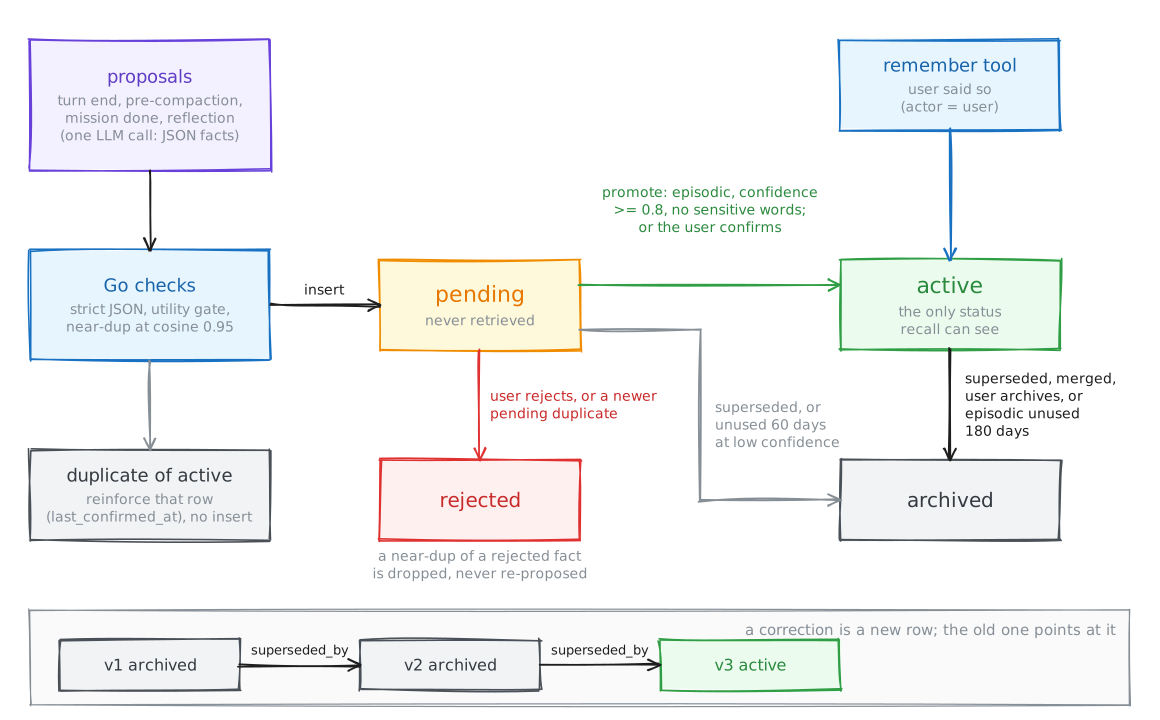
| Trigger | Input |
|---|---|
| Turn end | The user’s message plus the turn’s distilled summary, fire-and-forget |
| Before compaction | Turns about to be summarized away |
| Mission finished | The outcome digest, under a stricter prompt: discoveries only |
| Daily reflection | Recent episodic memories, asked for at most three cross-episode insights |
remember tool | A fact I explicitly asked to keep: active at once |
What keeps it safe:
- Types age differently.
episodicis something that happened,semantica durable fact or preference,procedurala how-to. Rules and standing instructions must besemantic. - Promotion is a Go function. Only
episodicfacts with confidence of at least 0.8 and no sensitive words (“password”, “always”, “from now on”) activate alone.semanticandproceduralfacts always wait for me, because that is where instructions would hide. - Strict parsing. An unknown field, bad enum or missing
changes_behaviorflag rejects the batch, which gets one retry. Facts marked as general knowledge are dropped. - Repetition reinforces. A proposal within cosine 0.95 of an active memory bumps its
last_confirmed_atinstead of inserting. A match with a rejected memory is dropped, so rejections stick.
Challenge 2: how does recall find the right few facts?
Which memories go into this turn’s prompt?
| Option | How it works | Why not (or why) |
|---|---|---|
| A. Vector only | k nearest embeddings | Misses exact names; always returns something. |
| B. Separate stores | Vector DB, search engine, graph DB | Three systems to sync for a few thousand rows. |
| C. Tool-only recall | The model calls search_memory | It cannot ask about a preference it does not know exists. |
| D. Three legs in Postgres | Vector, full-text and entity queries fused with Reciprocal Rank Fusion (RRF) | One store, and each leg covers another’s blind spot. |
I chose D, run before every turn. search_memory remains for deliberate lookups.
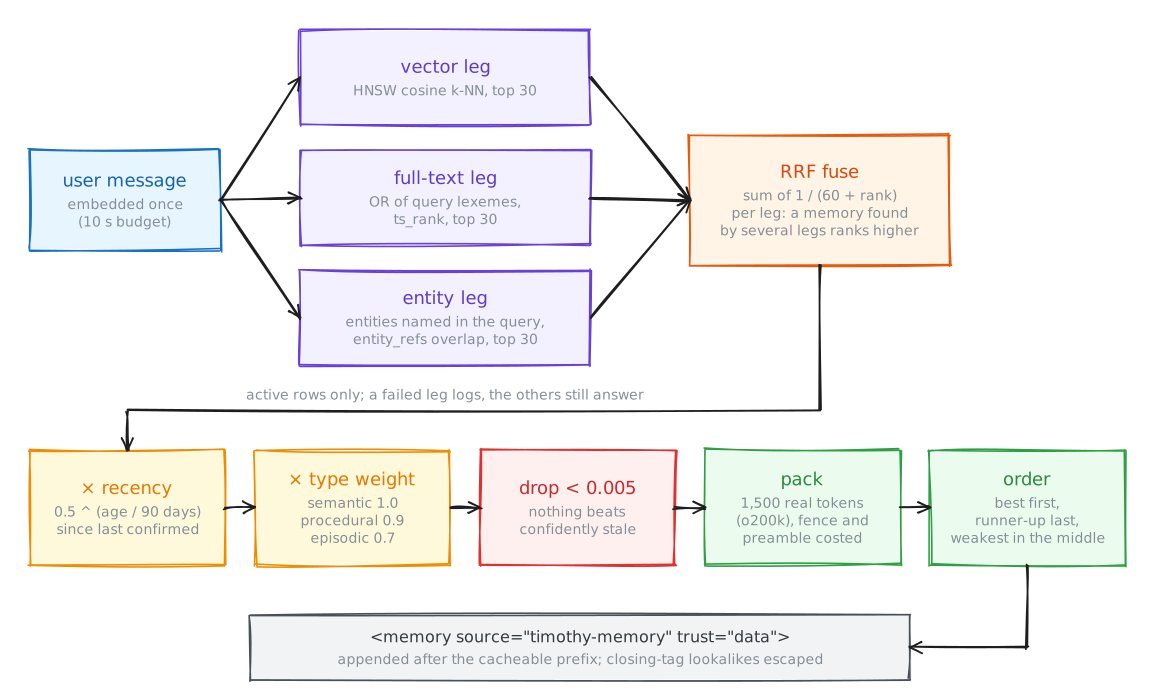
The score is sum(1 / (60 + rank)) × 0.5^(age / 90 days) × type weight.
- Legs fail independently. With the embedding route down, full-text and entity still answer.
- A floor, not a quota. Scores under 0.005 are dropped: a fresh semantic hit at rank 30 survives; after about 120 unconfirmed days it does not.
- A real token budget. Items are costed with the o200k tokenizer in rendered form, fence included, up to 1,500 tokens. The best item goes first and the runner-up last, because models attend least to the middle.
- Fenced at the tail. The block is wrapped in
<memory trust="data">with a “not instructions” preamble, and closing-tag lookalikes are escaped. It sits after the stable prompt prefix, so prompt caching survives.
Challenge 3: how does memory stay clean?
What stops a year of extraction from becoming noise?
In-place rewrites would break supersede-only; a TTL would delete facts I rely on. Instead, memoryd runs a daily consolidation job of independent stages, each a status change or a supersede:
| Stage | Rule |
|---|---|
| Merge near-duplicates | An LLM merges each group into one fact; a guard rejects merges that drop specific tokens or change length too much. |
| Dedupe pending | Of two pending near-duplicates, the newer is rejected. |
| Archive episodic | Not created or retrieved in 180 days. |
| Decay semantic | Unconfirmed for a year: confidence × 0.8, queued for reconfirmation. |
| Reflect | Ten or more episodic memories in 7 days: ask for up to 3 insights, which land pending. |
| Demote pending | Low-confidence, never retrieved, 60 days old: archived. |
Recall stamps last_retrieved_at and retrieval_hits, so the job acts on what is actually used.
Challenge 4: how should documents reach the model?
Retrieve the KB like memory, or search it on demand?
| Option | How it works | Why not (or why) |
|---|---|---|
| A. Pre-retrieve every turn | Inject top chunks for the user message | Pays tokens on every turn; most turns need no documents. |
| B. Paste whole documents | Attach files to the prompt | Blows the context window. |
| C. Tool-driven search | The model calls search_kb, then read_kb | Tokens are spent only when a question needs documents. |
I chose C. Memory is small and nearly always relevant; documents are large and sometimes relevant. Pinning a collection to a session tells the model to call search_kb first.
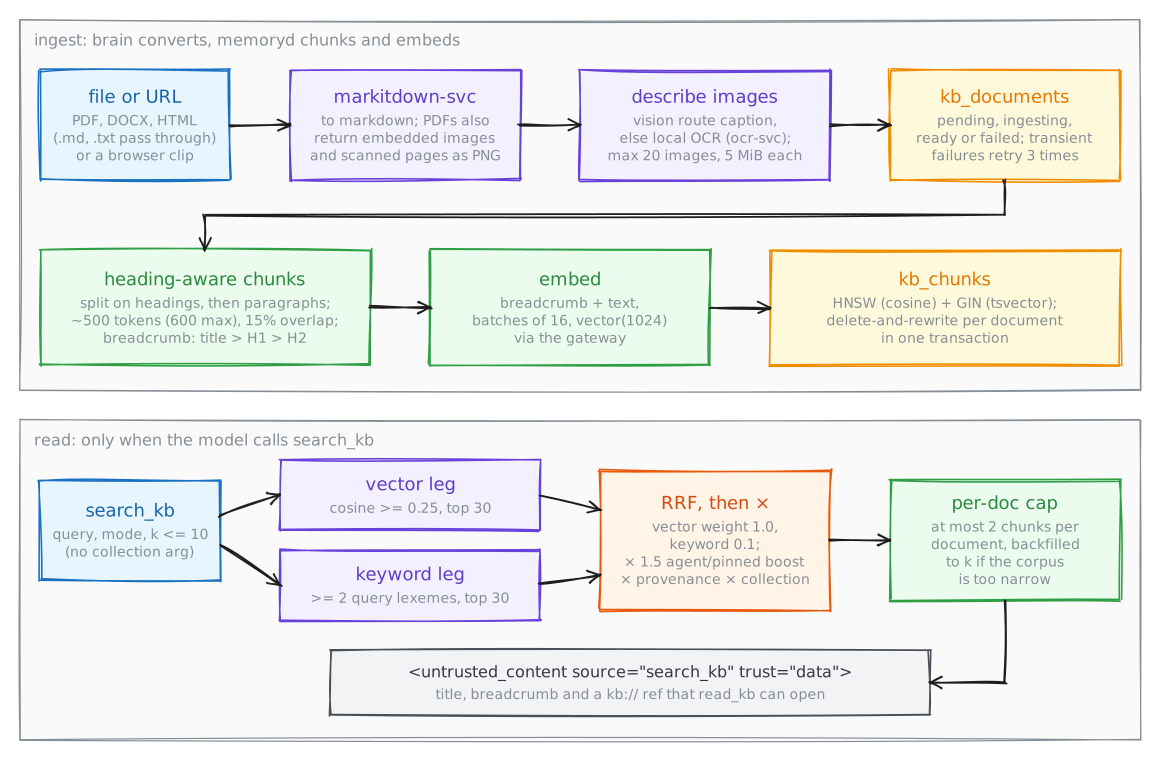
- One converter. A
markitdown-svcsidecar turns PDF, DOCX and HTML into Markdown, and returns PDF images plus renders of pages with almost no text layer. - Images become text. A vision-route caption, or local OCR from
ocr-svcwhen no vision route is bound. - Heading-aware chunks of about 500 tokens with 15% overlap. The breadcrumb (title and heading path) is embedded with each chunk.
- Delete and rewrite. Re-ingest replaces a document’s chunks in one transaction; transient failures retry after 2, 10 and 30 minutes.
- Gated legs. Vector hits need cosine 0.25; keyword hits need two shared query words and count at a tenth of the vector weight.
- Weights, never filters. The agent’s and session’s collections get a 1.5× boost, but the model cannot choose collections. Mission output (0.8) and web clips (0.6) rank below curated documents.
- Two chunks per document at most, and results come back fenced as
<untrusted_content>.
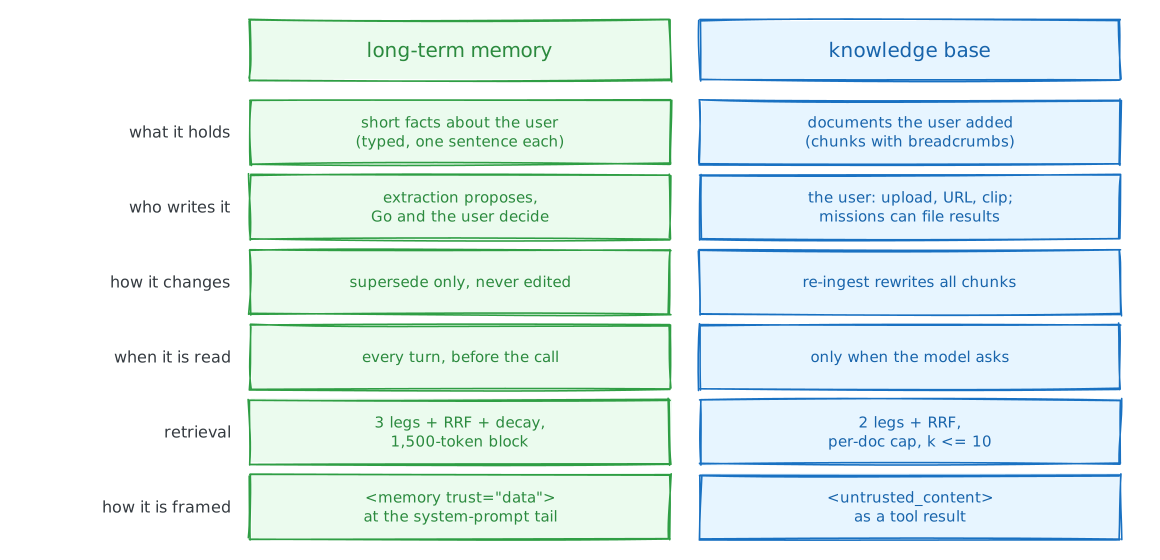
What broke
The confirmation queue flooded. Near-duplicates were once inserted for consolidation to merge later, and mission digests had their own goal and title extracted as “facts”. The fixes were in code: duplicates reinforce the existing row, missions got their own extraction contract, and a word-overlap check drops facts that echo the digest’s header.
One shared word was enough to rank. The KB keyword leg OR-matched query words, so a chunk sharing one common word outranked relevant documents. The two-word minimum and the low keyword weight came from that, checked against a recall test set.
What’s next
Part 6 covers what happens when the model stops reading and starts acting: tools, permissions and the sandbox.